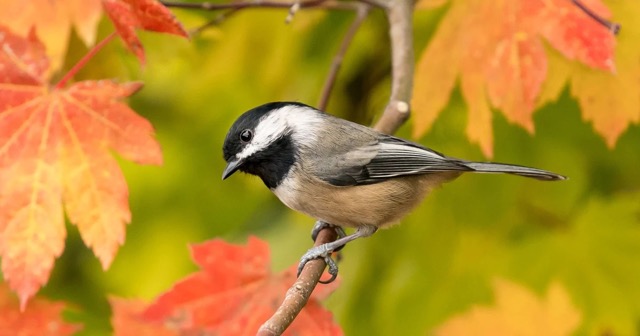
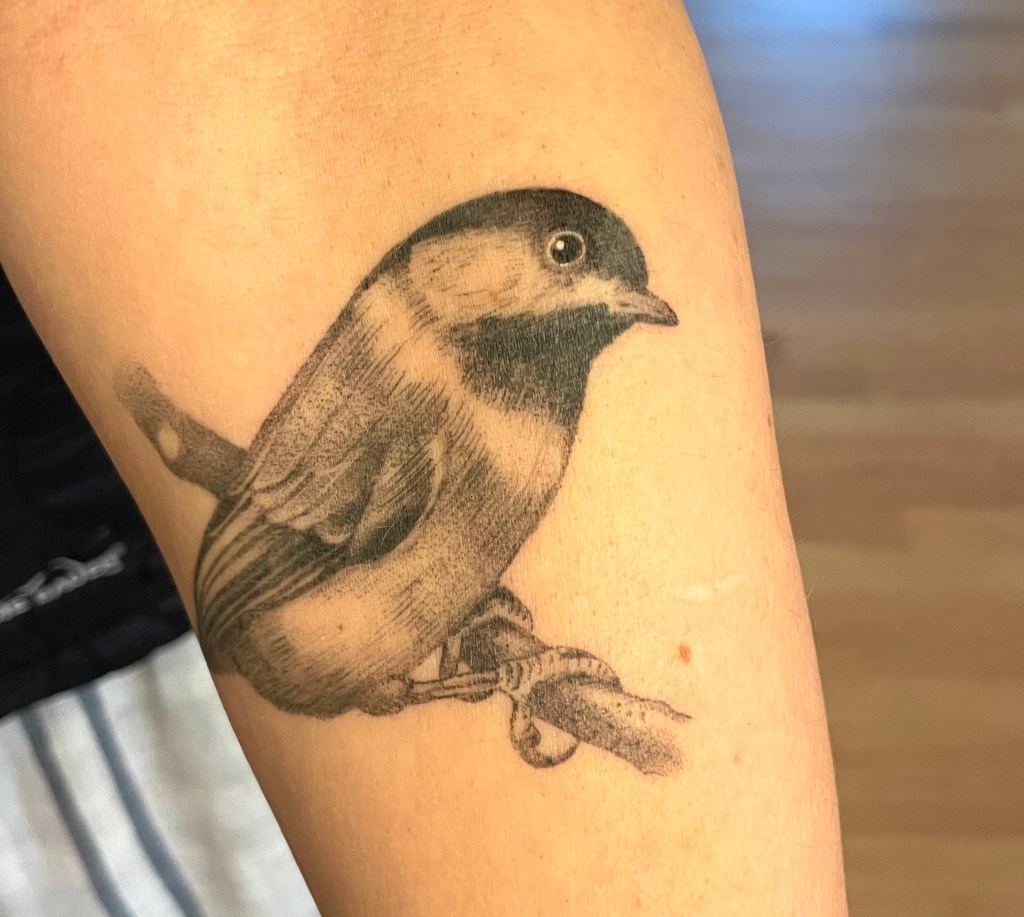
The gentle whistle of a black-capped chickadee has the potency to sway me skyward from whatever gloom may be simmering in my head. Darkness to light, perturbation to peace, delivered on a few puffs from deep within his syrinx. If there is still birdsong, a small part of me still believes everything will be okay.
The chickadee’s delightful call isn’t the only reason my lone tattoo is of a Poecile atricapillus. With soft beige underbellies, brush-stroked gray feathers, pearly white cheeks, and black cap and bib, their crushingly cute appearance deems them universally adorable. Their impatiently acrobatic moves, from power line to feeder to swinging upside down on a birch twig, animate the pace of their days. Gather as much of this beautiful life as I can before it’s over.
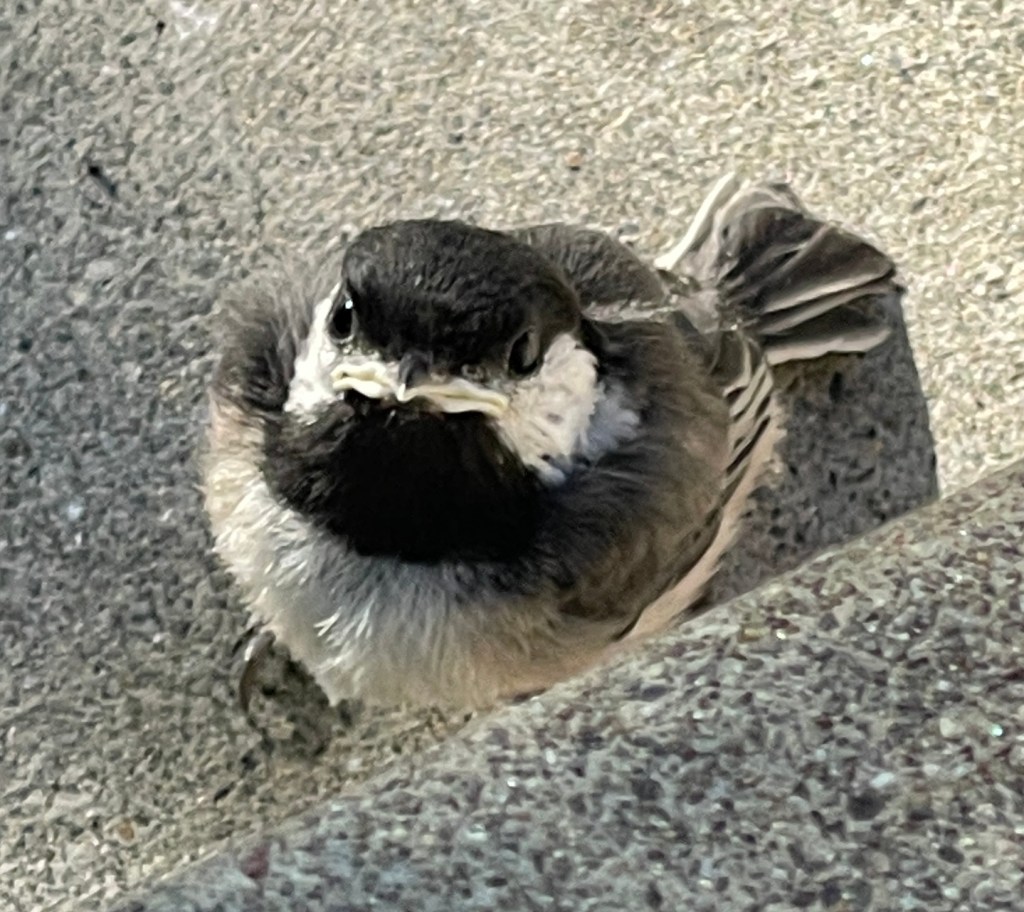
Last year after taking a class in bird boxes and learning that chickadee homes (tree cavities) are routinely cut down, I set out to see if I had what it took to raise a brood. I purchased a box specially constructed for chickadees, sprinkled the bottom with wood shavings, and selected a spot where I could spy on their comings and goings. A pair of newlyweds moved in within days. Near the end of nesting season, the parents circled as if on conveyer belt, delivering grub after grub to the box. Shortly after, six fledglings floated down from the box in the course of two hours. I nearly stepped on one at my doorstep before taking a photo.
When I took down and cleaned the box, two were left inside having sacrificed their food for the others. Still, eight nestlings! I couldn’t believe such a simple act of hanging a bird box could bring forth so much sweet life. I couldn’t wait for the following March when I could put the box back up.
This week my therapist had me take a moment to slow my nervous system by observing something nearby that I love. I suppose this is why I partner with a therapist from time to time: I need reminders of what works.
I described to her my vision of momma chickadee in her home, awaiting the unveiling of her children, attending to her one job. On cue dad returned to the entrance with the teeniest bright green caterpillar, her favorite craving (or so I imagined). I said aloud, She’s happy right now.
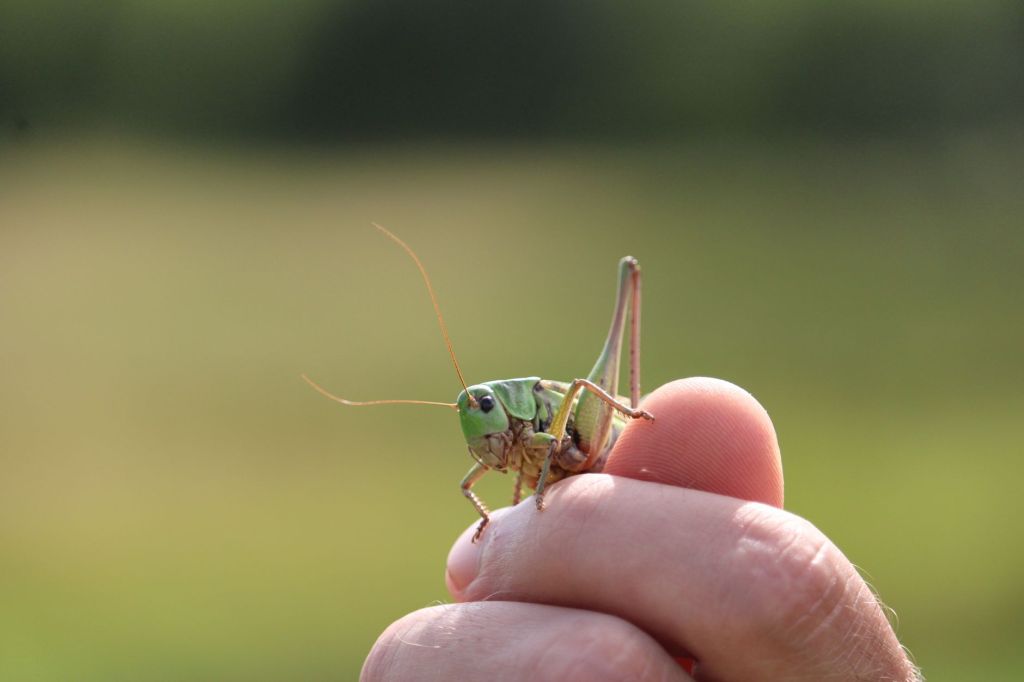
As trees are removed for needed housing in our city, other beings are removed as well. Fewer trees means fewer insects and birds, along with less shade, beauty, and stormwater mitigation.
Our local bird conservation organization recently released a reader-friendly report on the state of birds in Seattle showing an 18% decline in species and 21% decline in overall numbers within twenty years. It’s alarming enough that even the media took notice.
As numbers have been dropping across the country, the reasons why are common. Habitat loss (forests, grasslands, coastal areas) due to development, extraction, and agriculture is foremost. Windows and cats kill billions per year. Pollution deteriorates riparian areas birds need. Pesticides eliminate essential food sources.
I became aware of their importance only in middle age, but Audubon has been working for over a century to spread the word about why birds matter. One reason being, the health of birds and other species indicate to us the health of our ecosystems, and therefore warn us of how we’ll also be affected.
My own love for other species comes from a variety of reasons. They grace our lands and waters with beauty, joy, serenity, and awe, a welcome suite of positivity in tough times. The plants and animals on earth today have been evolving for as long as life has existed here, a miracle in itself that seems enough to qualify them permission to continue. And I think of future generations who deserve a world at least as replete with life as we have now.
The bright hope is that we can help mitigate biodiversity loss in ways that aren’t too challenging. We have options to choose from that fit wherever we are in our lives at the moment.
The report on Seattle’s birds succinctly suggests: “Reduce or eliminate insecticide use, especially broad-spectrum outdoor sprays and granules; grow native plants and trees, especially “keystone plants” that best support beneficial insects; support organic farming; create pollinator gardens; retain fall leaves and dead plant material in place for overwintering habitat; reduce artificial light at night; learn about and appreciate insects; partner with and learn from invertebrate conservation organizations.”
We can also vote for leaders who understand the value of nature and will pass policies to protect it. We can champion conservation projects and support those working hard to save nature. We can opt-out of supporting unsustainable businesses. We can reduce our consumption of things we don’t really need, and inspire others to use less plastic and chemicals. The U.S. has 40 million acres of lawn, an incredible re-naturing opportunity. Robin Wall Kimmerer launches a Less Lawn More Life program May 7 for anyone curious to join the movement. Every person contributes to momentum. Even simply connecting with others in green spaces can go a long way in lending more value to nature.
If you hear a chickadee when you’re out for a walk, perhaps do as my therapist would recommend and take a moment to pause and consider how his voice makes you feel. There’s a whole world out there, mostly hidden from our busy lives, that is full of vibrant life and the tenacious will to continue. If we can still hear birdsong today, tomorrow, next year, then just maybe, every little thing will be alright.