At 5am when we set out to find her, the beach in Costa Rica was still dark, a few days before the new moon. Our guide illuminated the way with a dim red beam, translator Patricia explained how white light frightens the turtles, turns them back toward the water. Our group of eight followed closely, as we were required to remain tightly packed. Patricia spoke softly of going in search of a mother about to lay her eggs.
Olive Ridley sea turtles (Lepidochelys Olivacea) migrate thousands of oceanic miles, coming back using geomagnetic abilities to the same sands from which they emerged when it’s time to deliver their own babies. During nesting season in Ostional Wildlife Reserve, the females arrive together in the hundreds when the timing is right. The males remain out at sea waiting to mate again.
We were in Nosara the week before Christmas, and I was obsessed with figuring out how to see the turtles. I would never have forgiven myself if I missed my chance. The Arribada (arrival) does not run on a human-determined schedule, but is rather guided by the impending new moon. By more kismet than obsession, I was able to reserve the last opening to see them on the final day of this season’s Arribada.
We continued walking gingerly across the sand, literally walking on egg shell fragments, until our guide stopped and pointed the red beam at the tail of a turtle just beginning to dig. Her back flippers carved into the sand, swiping up little clouds of volcanic grains until the hole met her satisfaction.
The flashlight was laid pointing at Olivia’s bum (I named her just now), so we could witness the ancient biological process up close. It felt personal, her cloaca so clear, that I vowed to make up for the intrusion on her privacy by spreading the word about sea turtle conservation.

Sea turtles have inhabited our blue planet for 110 million years. Whenever a number like that presents itself, I’m never able to fully grasp it no matter how hard I try, no matter how badly I want to honor that time frame. They have endured here for a very, very long time.
I suppose because of this unfathomable length of time, the reality of their disappearing populations hits harder. Nearly all seven species of sea turtles are threatened with extinction under the IUCN Red List. Overexploitation, illegal harvesting, and drowning in fishnets have plummeted their populations. Climate change complicates their future since it’s the temperature of the sand that determines the sex of the babies – warmer makes females, cooler makes males. As with other flora and fauna, they may not be able to evolve fast enough to keep up with a rapidly warming planet.
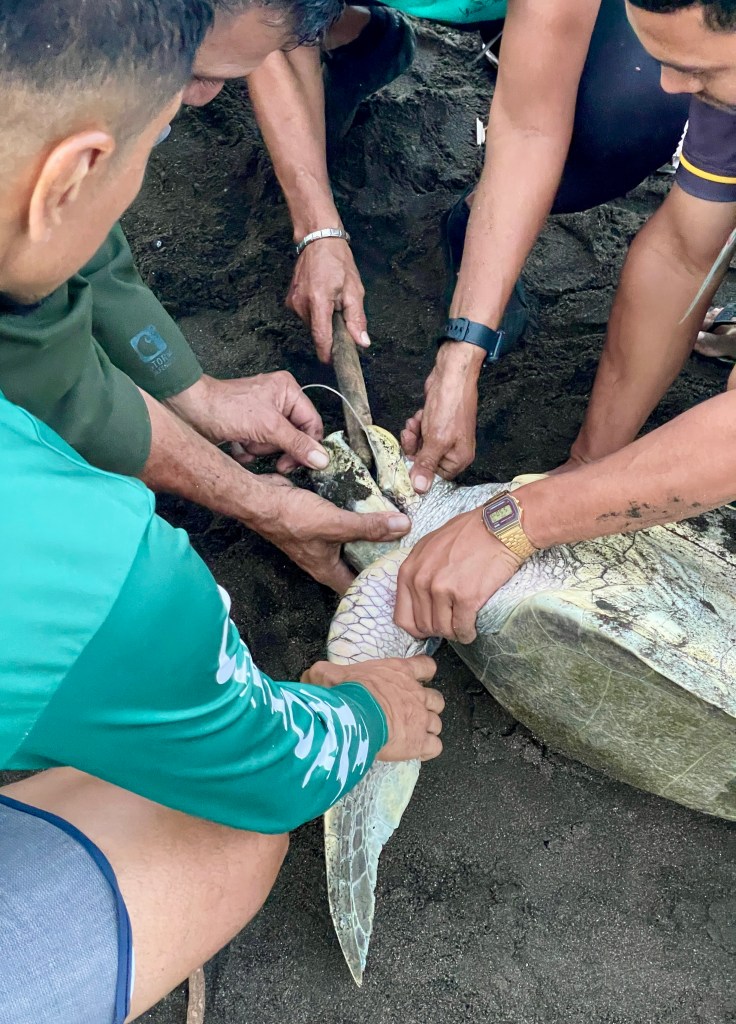
Indeed even while we were there, four guides worked together to try and remove a fishhook from a mother’s mouth. Thankfully they succeeded, but those that drown in longlines number higher.
Olivia dropped her eggs one to two at a time. They tumbled into the hole, making a pile like a shimmery croquembouche. I felt fiercely protective of those little white balls that held my favorite baby animal.
The last egg released, Olivia’s back flippers buried her clutch. She would never see a single one of her children. Not the 99 who would be eaten by predators while scurrying the hundred yards from nest to sea, nor the one lucky baby who would make it under the surf. I took some comfort in knowing that while unrestrained tourism disrupts the nesting process, a carefully guided human presence can actually help the babies to survive. Flocks of vultures waited in the trees for us to leave their buffet.
Just before our trip, PBS Nature aired a new episode about jaguars saving sea turtles not far from where we were. The jaguars take one turtle for nourishment, but the trade-off is that more of the turtle babies survive because the jaguars serve the purpose of clearing the beach of other predators. Nature indeed.
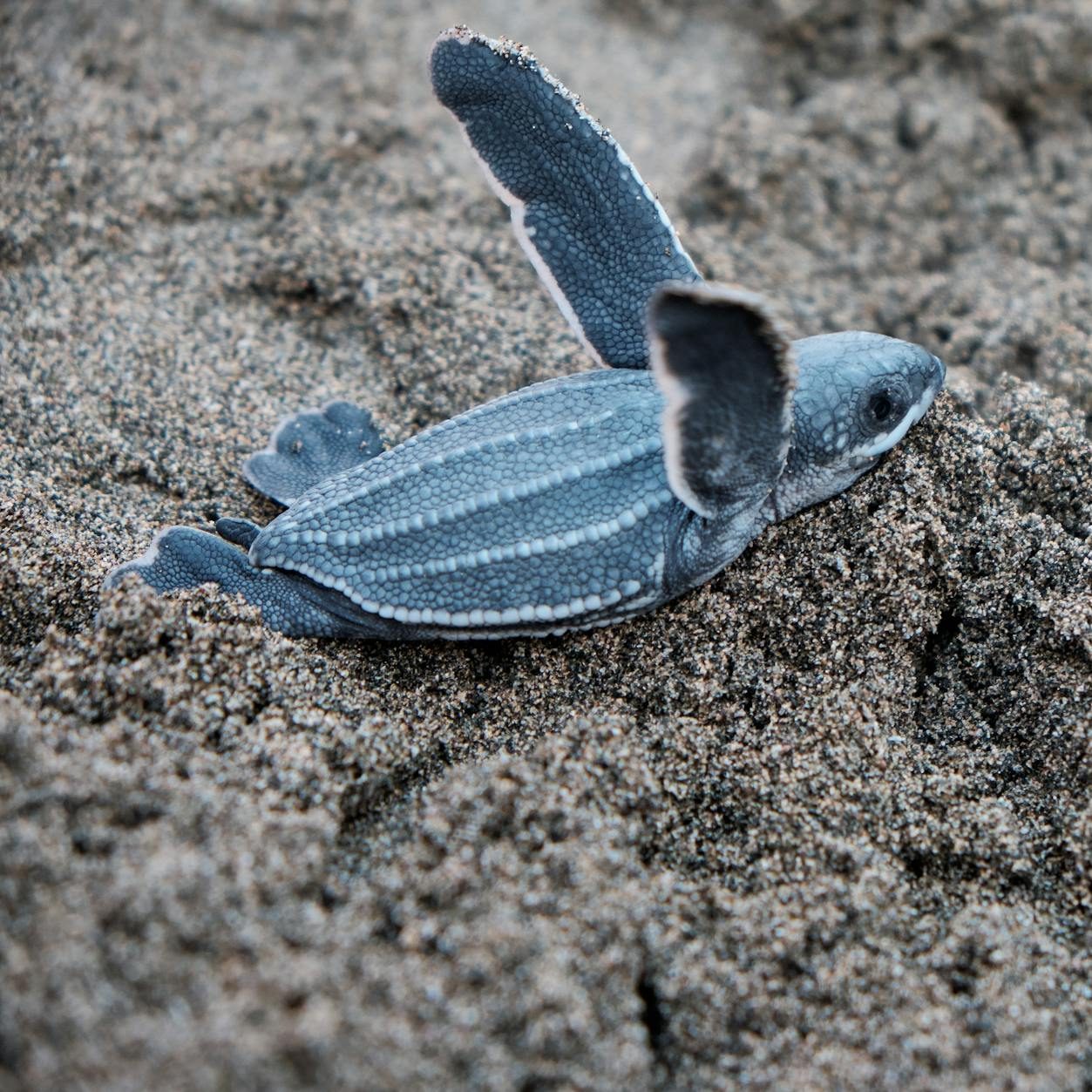
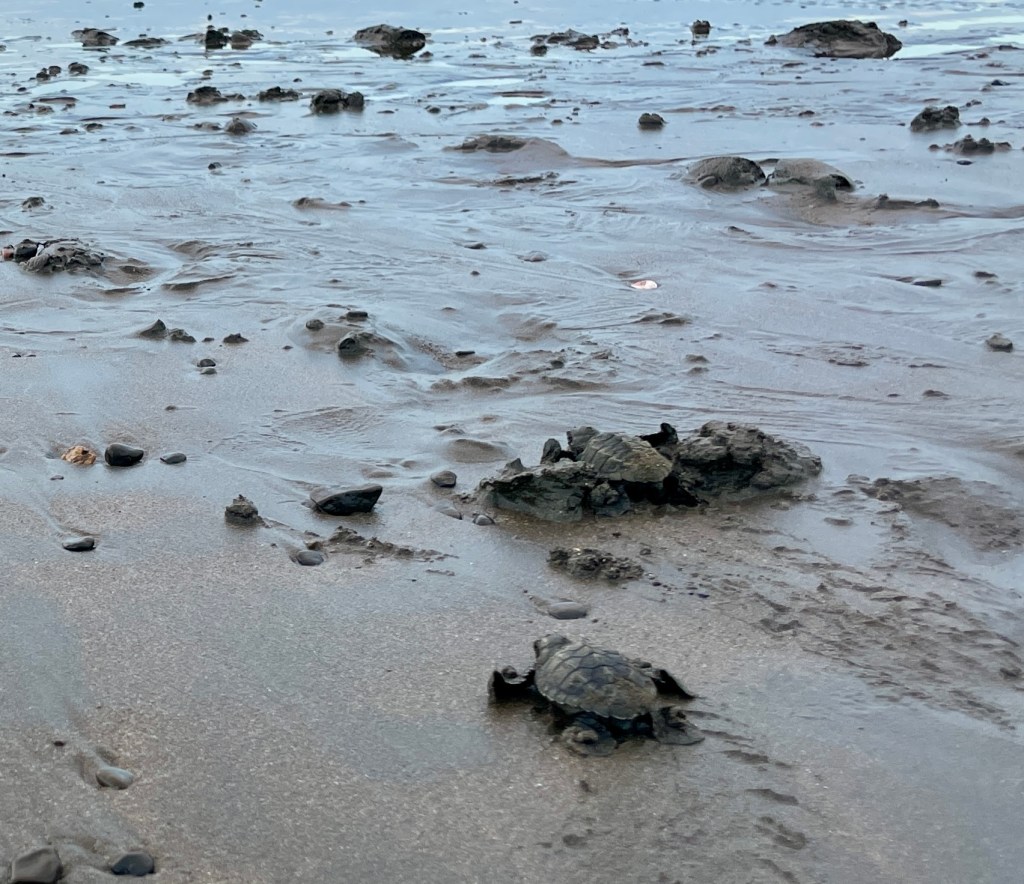
If stray dogs did not dig up the nests and eat the eggs, the baby turtles would begin to dig their way out of the sand in about seven weeks. It crossed my mind more than once to camp on the beach to fend off predators day and night. A few nearly invisible babies were scampering about in the general direction of the sea, and I did save one by pushing an oblivious man as he nearly stepped on it.
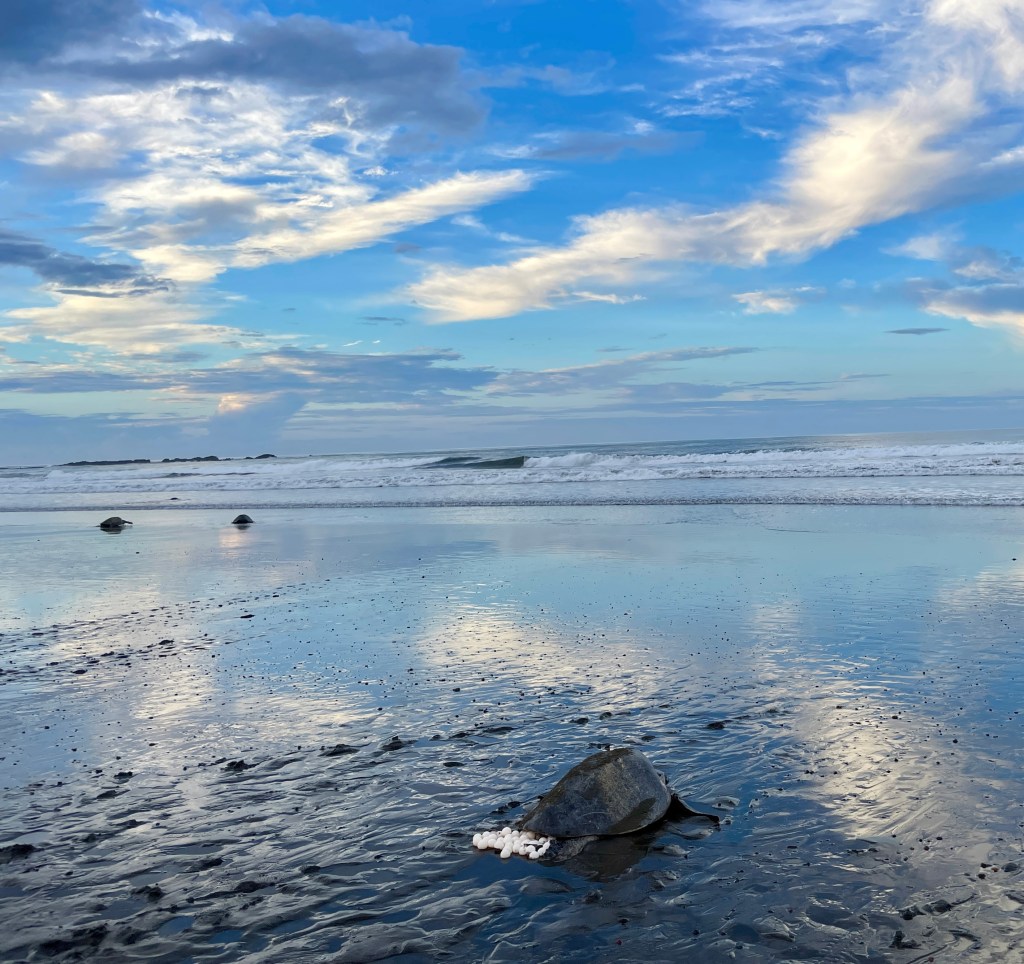
Patricia pointed out a few turtles closer to the water than their sisters. Behind them lay their clutch on top of the sand, unburied. These mothers are too old and tired, Patricia said, to make it all the way up the beach to dig their egg chambers. So they crawl just enough out of the water to deposit their eggs because they can’t lay in the water. I felt the urge to comfort these mothers, one tired mama to another.
As the beach continued to lighten with sunrise, I knelt in the sand with Olivia. In my mind I was communing, she may have been exactly my age for all I knew. We were both mothers, we loved the sea. She didn’t seem to register my presence, perhaps her species has had to deal with all sorts in their hundred million years. She would continue to migrate, mate, come back, have babies, as long as her life would allow. As long as we would allow her to. It’s in her DNA to keep trying. It’s in my DNA as well.


 Annegsherwood.com