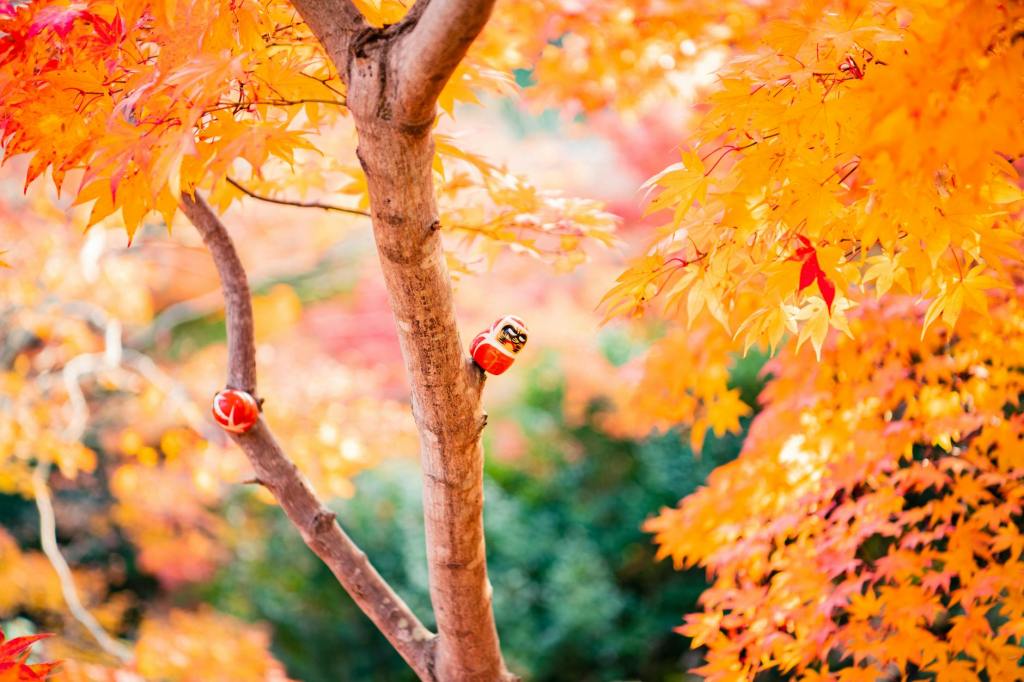
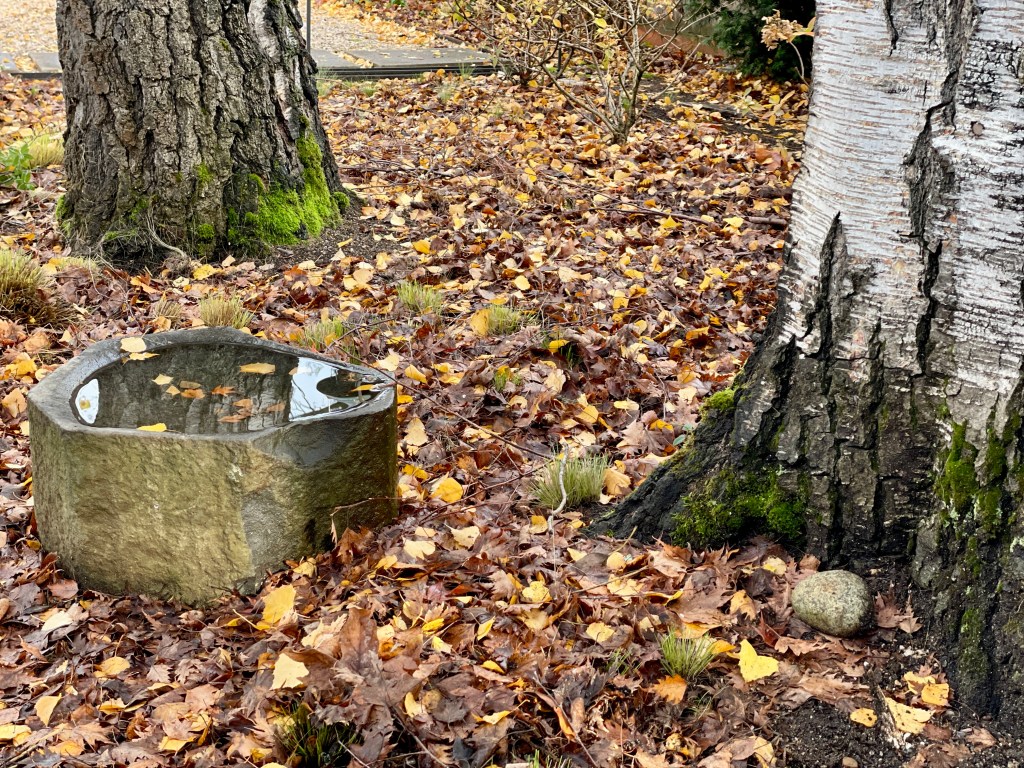
Through the hours of a quiet afternoon, I watched her transform. Blushing from sun-kissed gold to smitten crimson, in love with autumn. The cool and liquid air spoke her language, coaxed her metamorphosis. She was happy to go along, letting go of a leaf from the tip of a limb, feeling it tickle on its way down to join the others already sheltering insects for winter. “Sleep well, my littles,” she said to the wrigglers who keep her company all year long. She tucked them in with the rest of her leaves, and closed her eyes for her own season of slumber.
The above paragraph was the result of a prompt in a writing class I took about using our words in service of honoring the wild world and all her beings. Rendering them to life such that they enrich our stories and bring our readers closer to the natural world. The effect can create a more meaningful connection, and may even inspire empathy with those beyond human.
One of our readings for the class was an essay from Robin Wall Kimmerer’s Braiding Sweetgrass, a favorite book of mine, and still a bestseller twelve years after publication. The essay was one that had stuck with me for years, changed the way I experienced animals.
In Learning the Grammar of Animacy, Kimmerer describes how she was drawn to learn Potawatomi, the native language of her ancestors, despite its complexity and stark contrasts with English. The language evokes living things more deeply than scientific names can. Potawatomi is rich in incorporating the natural world, animating it, connecting humans to beings other than human. It brings everything around us to life. We are all relatives.
This concept of being related to all of the natural world gave me a pause of delight. I instantly felt less alone on the planet. And of course we’re all related, as humans are nature too. I’d just never really considered it until Kimmerer gently guided me to see in a new way.
After reading her essay I could no longer refer to animals at “its”. It draws us away from them, distances us as though we are fully alive but they are only slightly alive, not alive enough to deserve equal footing. But referring to them as he/she/they, someone not something, brings them closer to deserving our love. There was a shift in my heart when I started seeing the non-human world as my extended family.
Calling the birds who visit my yard he or she makes me feel more connected to them, as though they are valuable companions, not just fluttering movement outside my window. Recognizing them makes me feel more human, more useful as a companion to them as well. I want to protect their health and joy as I do my own.
So when the prompt was given to write about “something we observed happening outside”, I chose the maple in my front yard since at this time of year she calls out to be noticed. Though I wasn’t certain of her sex, for this exercise I called her she. My Instagram feed at the moment is replete with reminders to leave the leaves, so I also had overwintering insects on my mind.
My description of the tree isn’t a science report or an arborist’s observation. It’s just an exploration of what happens when I observe a tree in a different way. Some might find it far-fetched or unscientific or woo-woo to refer to non-humans as he, she or they, but I loved this experiment. Calling her she brought her to life in my front yard. It reminded me that we live together through the seasons, that she will also feel the joy of spring in her own way, as I do in mine.
Sleep well, my pretty maple tree. Sleep well, my littles under the leaves.

 Annegsherwood.com