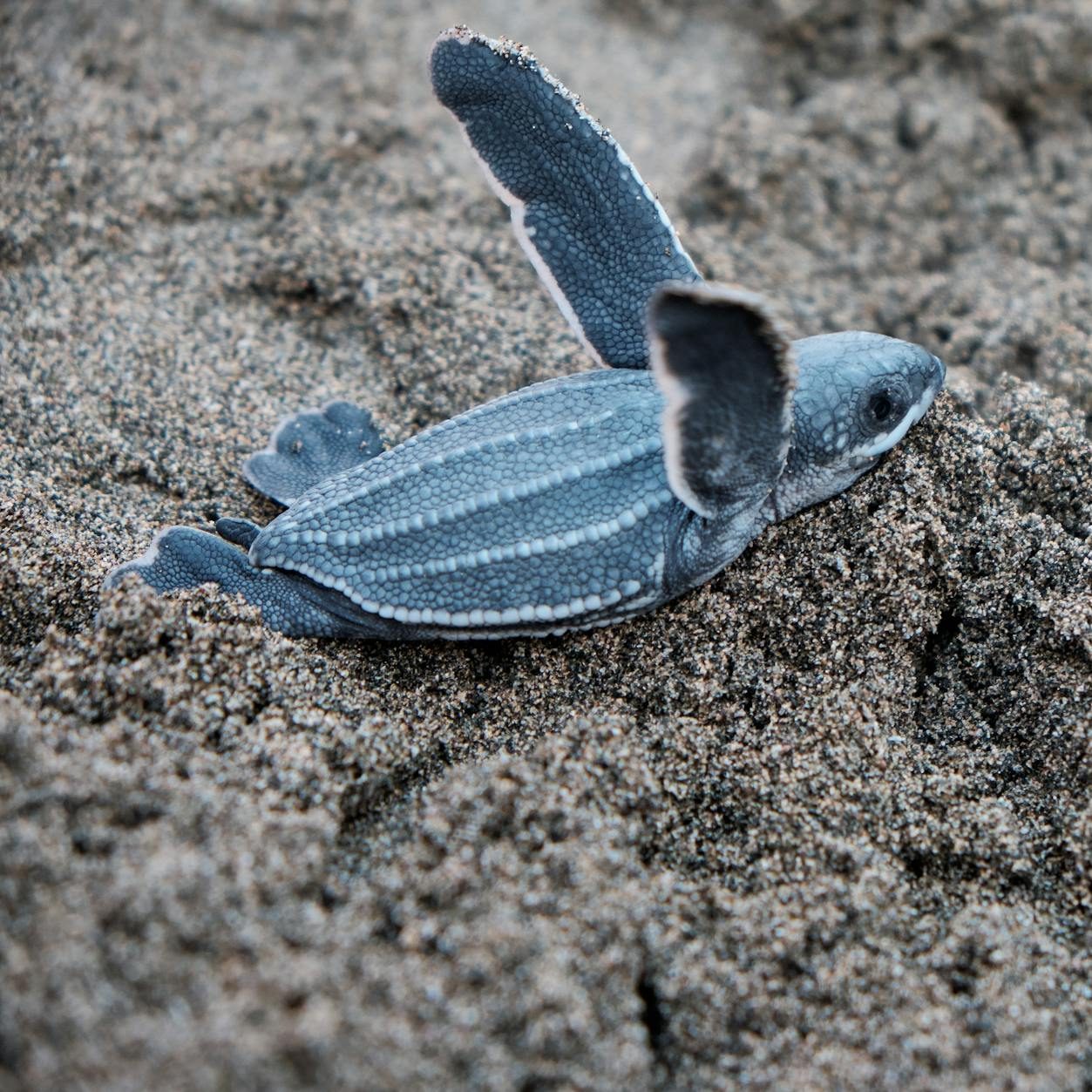
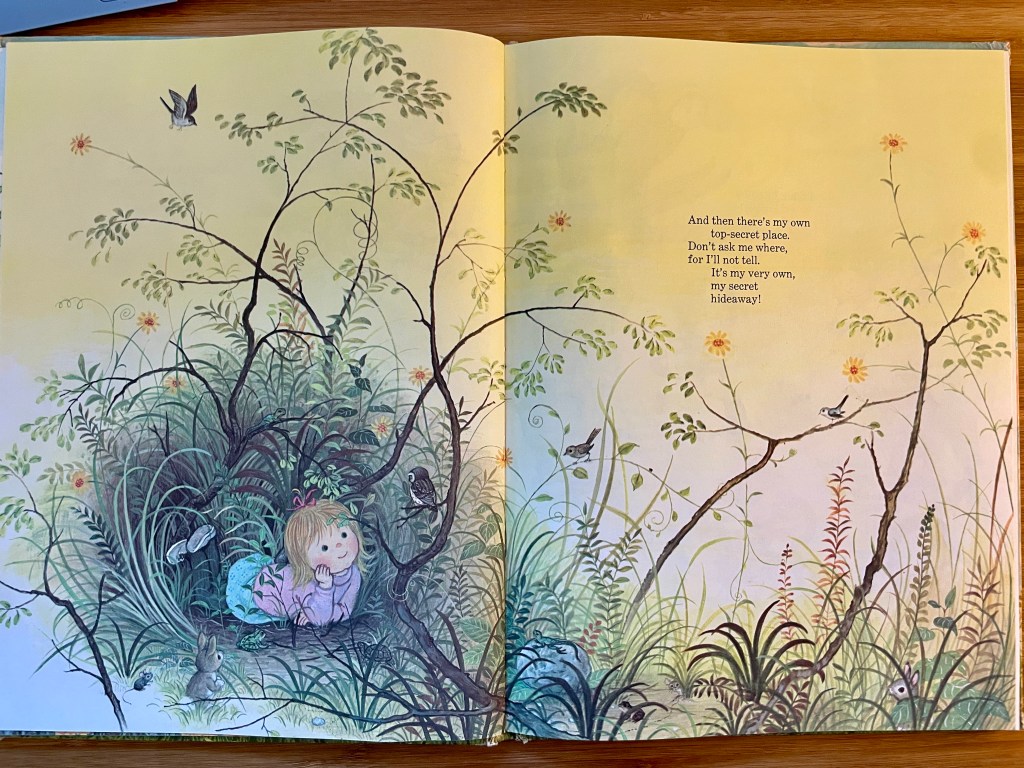
What do you want to be when you grow up?
When we answered this question as children, too young to calculate future expenses, did our answer actually represent our life’s true purpose? What we intrinsically cared most about, and therefore would feel the most fulfilled doing? If we answered comedian, did that mean our purpose was to make people laugh and bring relief in tough times? If we answered firefighter, was our purpose to rescue and inspire bravery? Doctor, to heed our need to heal? Writer to help us all understand the mystery of living?
My inner child is slowly and forlornly shaking her head at me. You blew it, she’s saying. We were supposed to be a marine biologist. We always loved the sea and what lived within its depths. What happened?
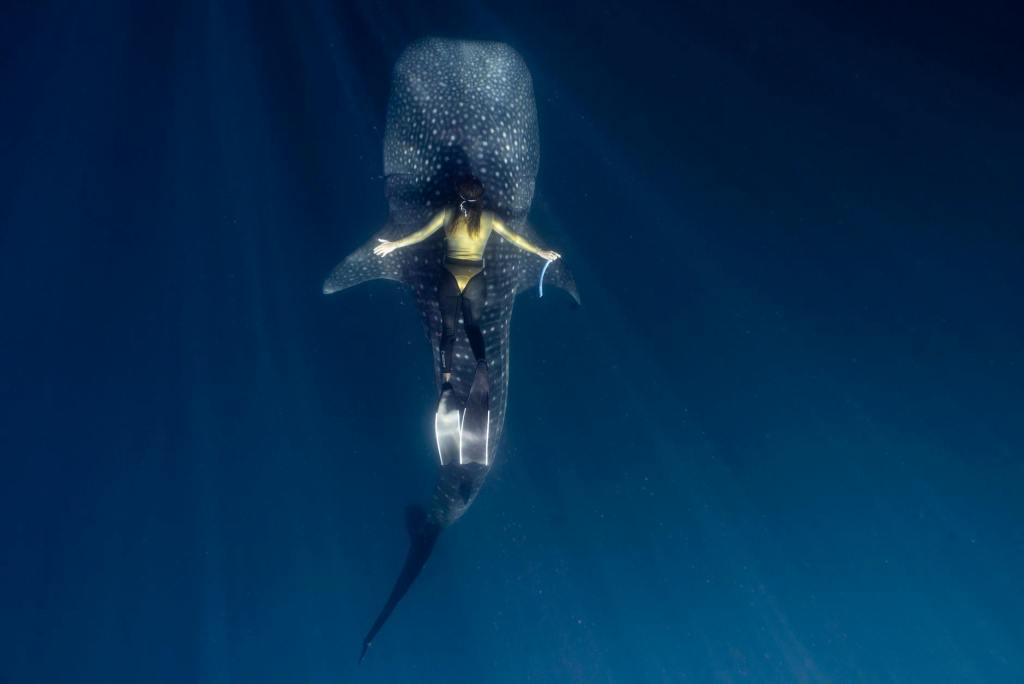
She’s right. The undersea world has fascinated me for as long as I can remember. We spent a handful of childhood summers on Catalina Island off the coast of Southern California. Our bungalow was rustic, the shared bathroom a spooky walk through the complex, but I got to eat Cookie Crisp cereal and Fun Dip, so I would have tolerated any accommodations.
The walk to Pebble Beach was long and hot and just about melted my flip-flops, but once we got in the water, it felt magical. I saw my first shark, a small elasmobranch cartilaginous fish whose threat I couldn’t determine, so it had me choking on my snorkel while escaping to the safety of my beach towel. I wish I could remember in full chromatic detail all the creatures I saw, but simply the experience of floating above a beautiful liquid world enchanted me. In 70’s and 80’s L.A., the landscape scrolling outside the car window was usually cloaked in smog, so what lay below the surface of the ocean seemed pristine by comparison. As yet unspoiled. (Back then I wasn’t aware of how much pollution was really entering the ocean, or how much oil had spilled only a decade earlier not far away.)
So as I sit at the dining table doing my schoolwork, my inner child is giving a nod of forgiveness. It’s about time. The course is Oceanography, with a focus on the Salish Sea.
Though I’ve lived in Seattle for 35 years, I only recently learned what the Salish Sea is. If you live near Seattle, you know about the Puget Sound, and where the Strait of Juan de Fuca flows. If you’re Canadian, you know about the Strait of Georgia. The Salish Sea encompasses all three, covering 5,500 square miles.
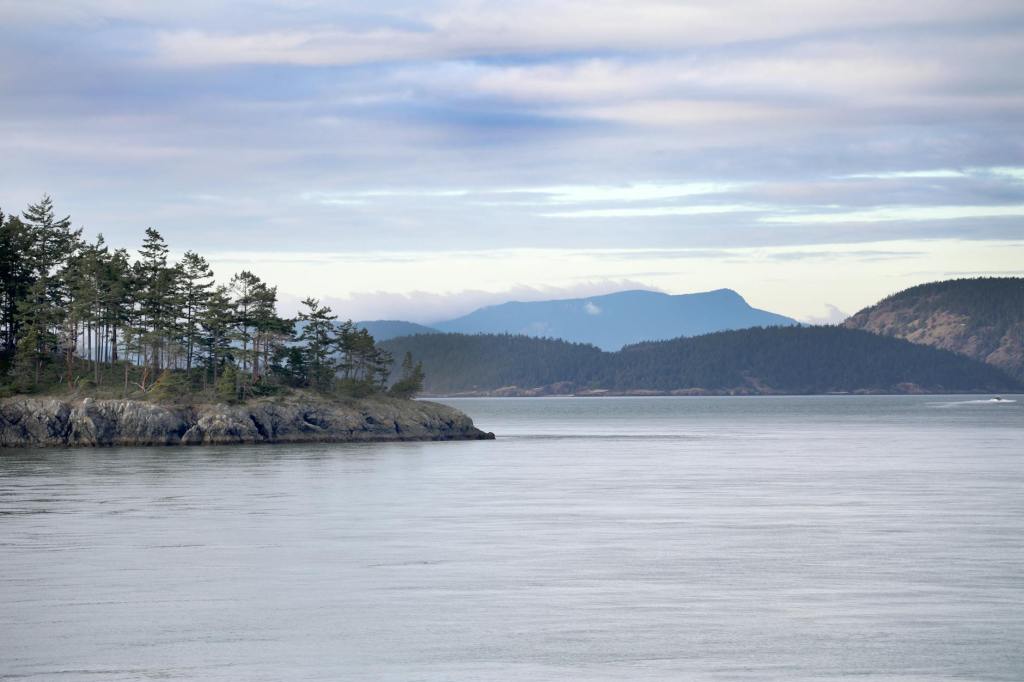
One of the lessons likened the shape of the Salish Sea to a tree. If viewed from a plane above the Pacific, the Salish might resemble a windswept coastal conifer whose Strait of Georgia branches reach longingly left into Canada. The Strait of Juan de Fuca is the trunk rooting into the ocean. And Puget Sound is the shorter tangle to the right, its many islands nestled within the branches. I love this analogy that equates one life force with another.
These three bodies of water meet and blend in the currents along with the ocean from the west and the rivers from the east. This commingling results in a huge estuary appropriately named as one whole. Every year the entire volume of water is replaced in a two-way flow of estuarine surface water heading out to the ocean, and deep ocean water sneaking in down below. The result is a marine area with incredible biodiversity.
The mechanisms of the Salish are fascinating, but what I love most about the course is the opportunity it provides to learn about what lives inside.
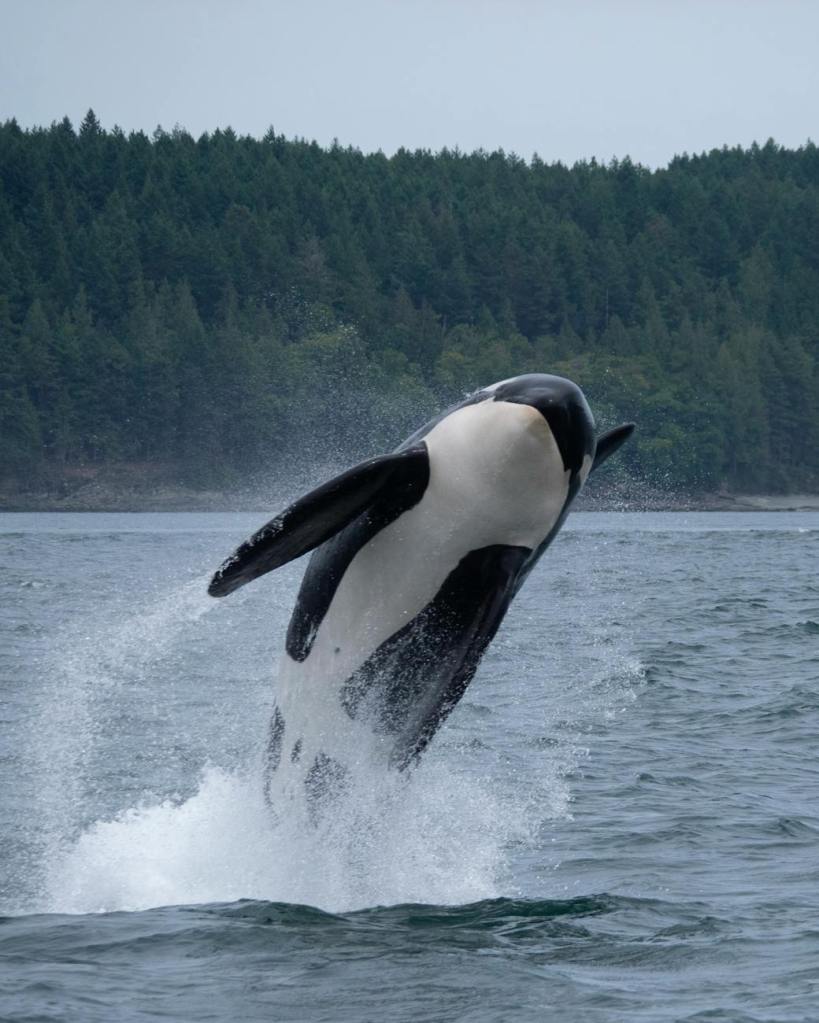
Our Southern Resident Killer Whales, (or Southern Resident Orcas), are perhaps our poster children for the Salish Sea, depicted on regional art both ancient and contemporary. The SRKW are one of the four communities of Orcas that live in Pacific Northwest waters, and they’re endangered with a population of 74. The J clan, with their own distinct dialect, consists of 3 matrilineal pods: J, K, L, all descendants of the grandmother who may or may not still be alive. Calves remain with their mothers for life, and their bonds are strong, as the story of J35 Tahlequah carrying her dead calf a thousand miles over 17 days showed us.
The reasons they’re endangered seem simple and straightforward, but the solutions require more human engagement.
Southern Orcas main food source is Chinook (King) salmon. Due to a legacy of dams, habitat loss, and pollution, the Chinook population has been dwindling to the point of its own endangerment, which means there’s not enough food for the Orcas.
Like salmon, Orcas are also affected by pollution. Toxic runoff from our urban environment accumulate in their tissues, slowly poisoning them and making it difficult for them to have healthy babies.
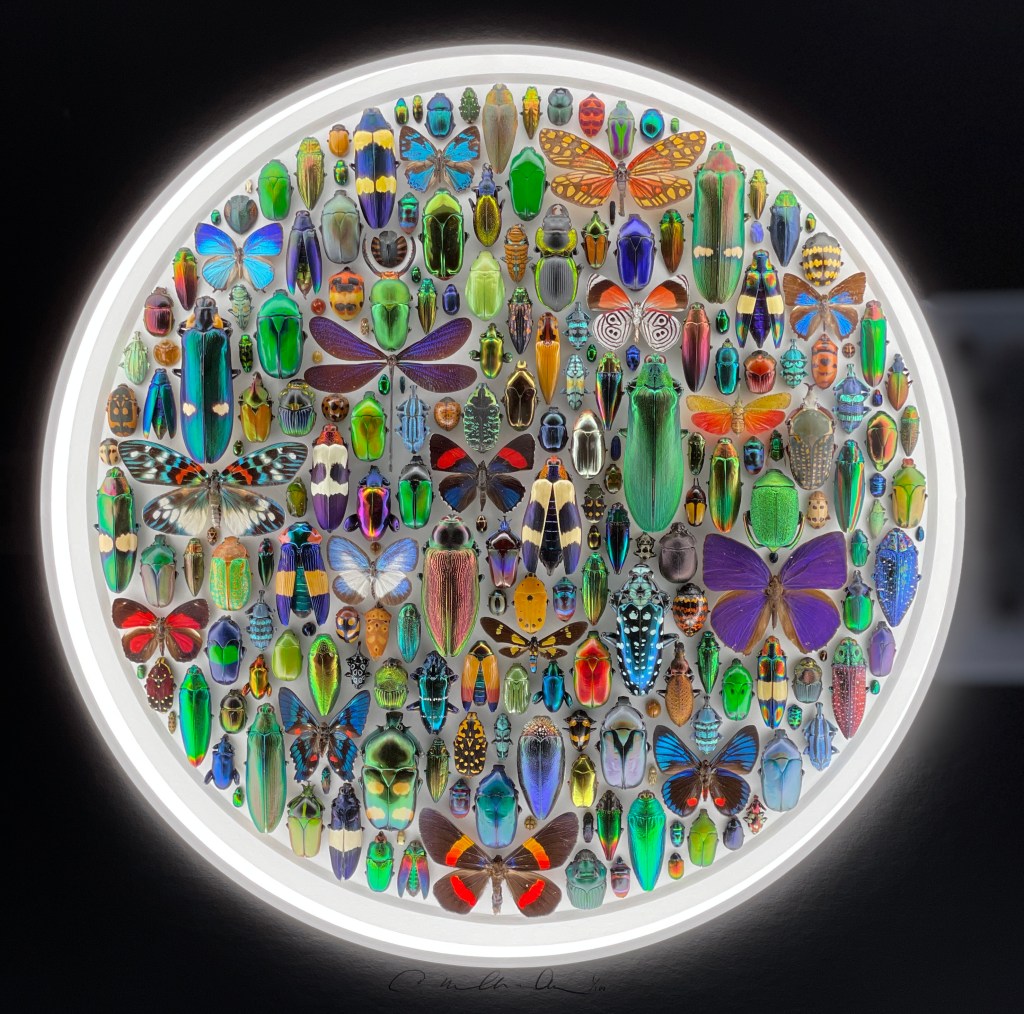
Orcas and Chinook aren’t the only species struggling. The EPA’s Health of the Salish Sea reports that the number of species at risk of extinction doubled from 2002 to 2015. Of these species, 59 are birds, or 34% of all the birds that need this ecosystem for survival.
When a wetland or riparian area is filled, developed, and polluted with industrial waste and runoff, the species who use those areas, such as foraging juvenile salmon, disappear. Other species of fish that birds eat are also affected when kelp and eelgrass spawning beds are destroyed by shoreline armoring.
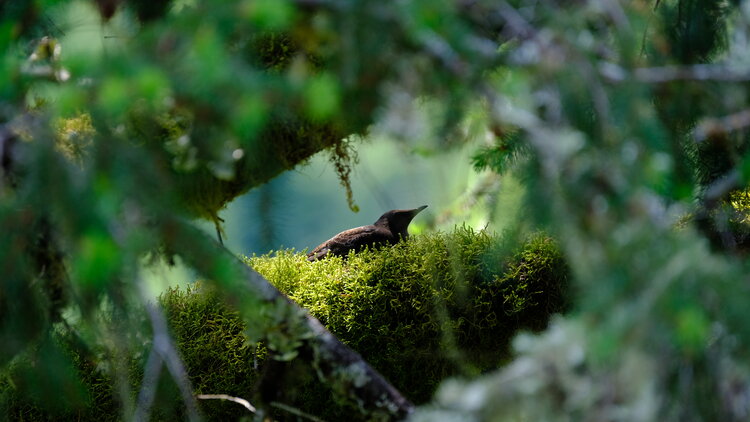
The elusive Marbled Murrelets, who nest in mossy old growth forests far from the water, have declined by more than 44% due to insufficient food like anchovies and herring. They fly a hundred miles round trip to bring one meal to their single hungry chick, so the quality and quantity of food is essential for their ability to feed their few offspring.
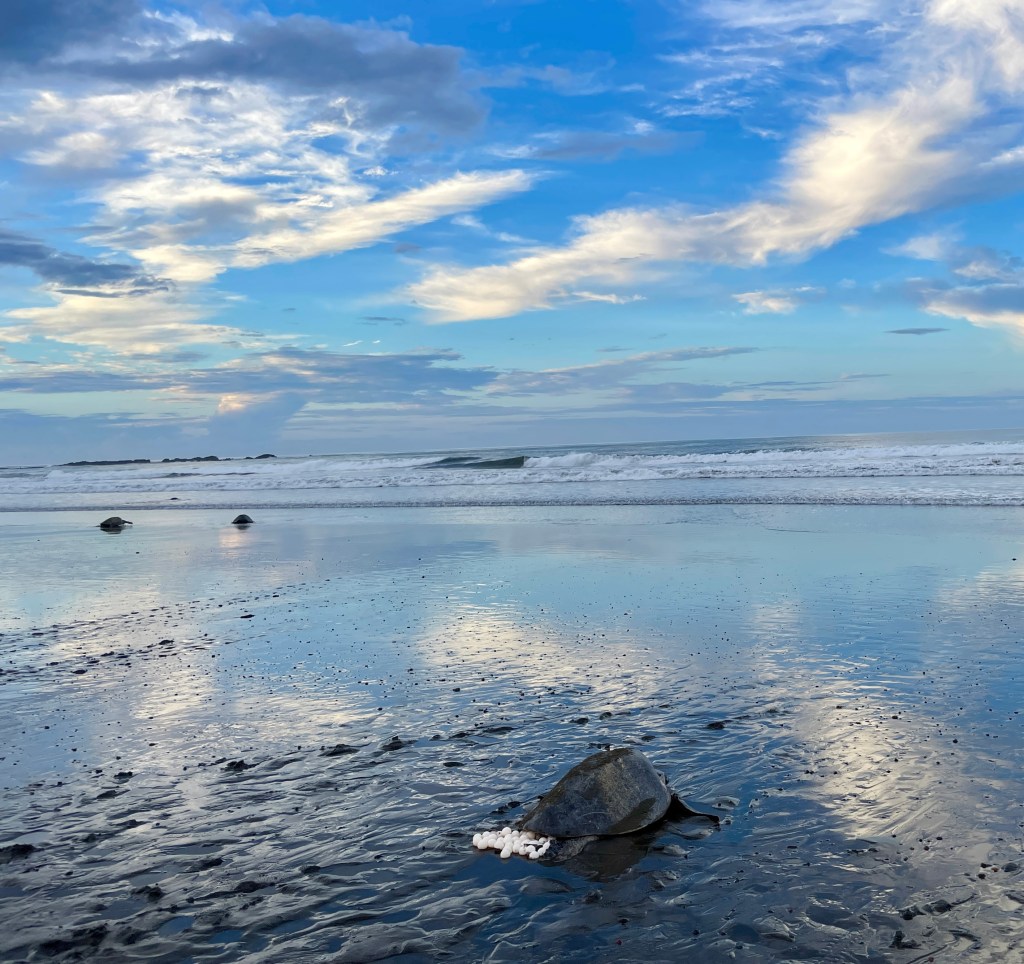
As an ecosystem indicator of the health of the Salish Sea, a decline in marine species is not only heartbreaking for the sake of the animals who deserve to continue to exist on our planet, it’s also a message to us that allowing the disappearance of other species will eventually affect our own survival. If not our physical ability to survive, then our mental capacity to thrive. Whether we view nature as simply essential for survival, or depend on it as a means of joy and peace, it seems to me that our attention to, preservation of, and restoration of nature should be easy choices. For a treasure as biodiverse as the Salish Sea, millions of marine animals depend on our wisdom and care. When we choose to care for them, we’re also choosing to care for ourselves. If the Orcas disappear, we will still be living within their polluted ecosystem.
I’m not sure exactly what it meant when as a child I answered the question of what I wanted to be when I grew up with: Marine Biologist. I’ll never be Sylvia Earle, who devoted her life to bringing attention to the ocean, inspiring millions to take a look underwater. Maybe I’ll only get to keep learning and sharing what I’ve learned. Or maybe my answer was just a puzzle piece in a bigger picture of my life’s purpose, the other pieces scattered throughout the Salish, or across the ocean, or within the pages of my textbooks.

 Annegsherwood.com